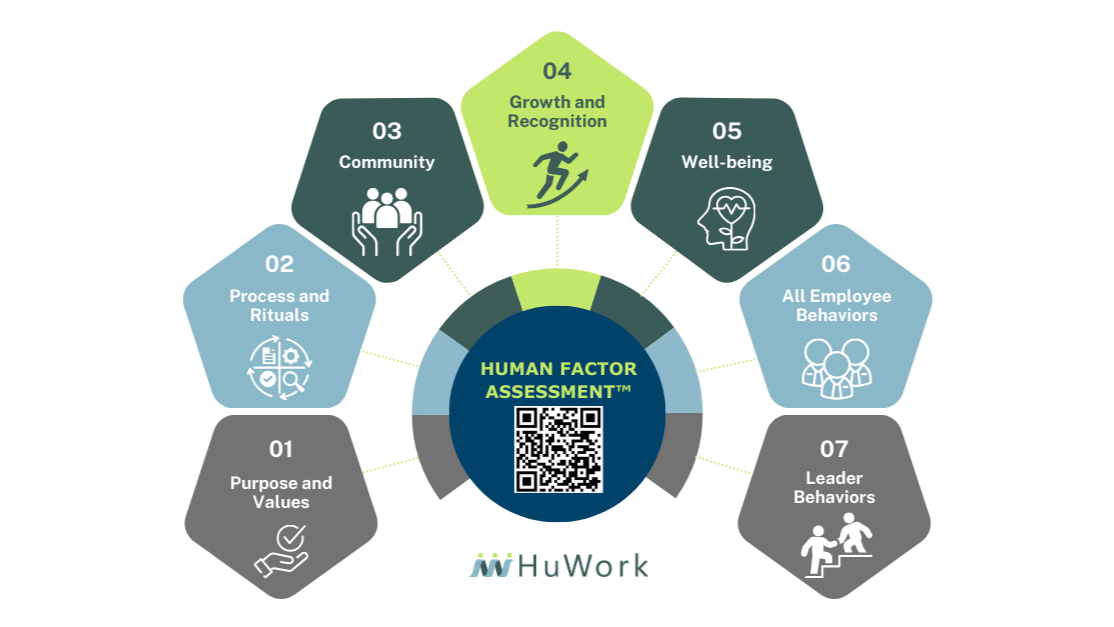
Tag: Human Factor Assessment

  • 8 – What Human-Centered Leaders Do Differently (Article 8 of 8)

    Why Human-Centered Leadership Matters

    In a time when burnout is rising, trust is declining, and AI is transforming the workplace, the need for human-centered leadership has never been more urgent. This isn’t about being soft, it’s about being strategic, responsive, and real.

    Many workplaces are still catching up to what today’s workforce needs: trust, purpose, and people-first leadership. It doesn’t mean leaders are not looking at performance metrics; it means that human-centered leaders are BALANCING both P’s: PERFORMANCE and PEOPLE. These leaders create the conditions for belonging, innovation, and resilience. Research shows that when leaders demonstrate certain behaviors, such as caring, connection, and trust, employee engagement and retention go up. Conversely, when trust is lacking, organizations face burnout, low morale, and turnover. According to a large leadership survey, only 46% of employees fully trust their direct manager, and even fewer trust senior leaders. That trust gap is a call to action.

    Think about the best bosses you’ve had in your career. As you dial into what made their style different and memorable, you will probably find a theme that they regularly engaged in human-centered leadership behaviors.

    🗝️ Key Takeaway: Human-centered leadership is now a requirement in a world of high AI and low trust. Balancing the performance and people side will differentiate successful organizations from those that struggle to attract and retain top talent.

    To read the full article click here.

  • 7 – The Power of Everyday Behaviors to Shape a Thriving Culture (article 7 of 8)

    Small Behaviors Can Make a Big Difference

    When we talk about workplace culture, big ideas like “trust” and “respect” often steal the spotlight. But culture doesn’t live in mission statements or posters on the wall. It lives in the everyday actions we take — the words we choose, the way we listen, the moments we show up for one another. A truly human-centered workplace is shaped conversation by conversation, choice by choice. When people bring kindness, honesty, humility, and real care into their daily interactions, a thriving culture naturally follows.

    🗝️ Key Takeaway: Employees have more influence than they think over culture, so be intentional about the words you choose, the way you listen, and the care you show to others. Consistent small actions create a truly human-centered workplace.

    To read the full article click here.

  • 6 – Running on Empty: Why Workplaces Need a Culture of Well-Being (article 6 of 8)

    Why Well Being Matters

    Work is where many of us spend the majority of our waking hours—and we know in our hearts that it should be a place that supports not just WHAT we do, but WHO we are, including our well-being. Here are a few of the reasons why we at HuWork feel well-being matters at work:

    1. Well-being can be a strategic advantage. Research consistently shows that an employee’s perception of how their employer supports their well-being is strongly tied to retention, performance, and overall company success. Translation: employees will work harder, be more loyal, and have better results. Sadly, according to Gallup only 21% of employees strongly agree that their organization cares about their overall well-being, tying a record low in early 2024.

    2. Mental health conditions are widespread. Recent data from the U.S. Department of Health and Human Services reveals that 76% of U.S. workers have experienced at least one symptom of a mental health condition, and 84% believe their workplace contributed to it. While no organization can solve every factor influencing mental health, team leaders can shape workplace conditions to help.

    3. Supported employees are happier and more adaptable. If in a good state, employees can better cope with work fatigue and the ongoing pressure to respond, adapt, and perform under shifting conditions, such as incorporating AI into their roles or dealing with an organizational structure change.

    🗝️ Key Takeaway: Well-being is essential for combating modern work fatigue while creating the conditions where employees can flourish.

    To read the full article click here.

  • 5 – Embedding Growth and Recognition into the Employee Experience (article 5 of 8)-

    Why Growth Matters

    Have you ever stopped to think about how moments of learning and recognition have shaped your career? Maybe it was a leader who believed in you before you believed in yourself, a stretch assignment that changed your sense of what you could do, or a well-timed “thank you” that reminded you your work mattered.

    These moments build confidence, purpose, and connection at work.

    Now, imagine navigating your career alone. No mentorship, no development opportunities, no recognition. Would you have taken the same risks? Found the same motivation? Felt the same fulfillment?

    The truth is, no one thrives through heads-down work alone. Growth and recognition are essential to helping people reach their full potential. Gallup reports that employees who feel their company invests in their development are 47% less likely to be job hunting. And when recognition is baked into company culture, voluntary turnover drops by 31% (Quantum Workplace).

    Yet too often, learning and development are seen as too costly or time-consuming, so employees are left to figure it out alone. Sometimes there’s investment in training platforms, but the culture doesn’t support people stepping away to learn. In other cases, perfection is rewarded while mistakes are punished—so growth feels risky, and people keep it safe by not stretching themselves.

    If we want people to grow, stay, and do their best work, development and recognition need to be a regular part of the culture.

    🗝️ Key Takeaway: Prioritizing growth and recognition means creating clear development opportunities, offering regular feedback, and acknowledging contributions beyond big wins. When employees feel supported in their learning and valued for their efforts, they stay engaged, motivated, and committed to their work.

    To read the full article click here.

  • 4 – The Connection Cure: Why Workplace Community Matters (article 4 of 8)

    What We Mean by ‘Community’ and Why Community Matters

    We often think of community as something that happens outside of work—in our neighborhoods, places of worship, and social circles. But whether virtual, hybrid, or in person, we spend most of our waking hours working. And yet, many workplaces lack that fundamental sense of belonging that turns a group of individuals into a community.

    At HuWork we view a workplace community as an interconnected web of relationships where employees can build relationships and have a shared purpose. Think about a time when you’ve worked on a team where people had each other’s backs, and how that impacted the way your job felt. This is the difference that true community makes, where you don’t feel like another cog in the machine. You know you’re part of something bigger, and it brings more energy to what you do.

    According to Gallup, without a sense of community at work, employees may feel isolated. This leads to decreased engagement, retention, and productivity. Research consistently shows that when employees feel a strong connection to their colleagues and the broader organization, they are more productive, collaborative, and committed to their work.

    Unfortunately, in today’s fast-paced, hybrid, and often fragmented work environment, it’s easy to feel disconnected. Keep reading for ideas on how to build a greater sense of community at work, whether you are a Team Leader or Team Member.

    🗝️ Key Takeaway: Building connection and community takes intentional effort, and it’s worth it because investing in meaningful relationships makes our workplaces more fulfilling and strengthens team performance.

    To read the full article click here.

  • 3 – From Routine to Meaning: How Processes and Rituals Define Culture (article 3 of 8)

    Why Process and Rituals Matter

    Our brains naturally seek patterns and structure to reduce stress and make sense of information. Intentional work rhythms, like team check-ins or celebrating successes, create stability and connection, signaling safety in an uncertain environment. Until we researched processes and rituals for the Human-Factor Assessment, we didn’t realize the many benefits they offer to organizational effectiveness, as well as employee well-being.

    Culture is shaped by these daily rhythms. Now is the time to think about whether your organization’s processes and rituals reflect human-centered values, so that your culture is visible in daily interactions, and not just words on a wall or a website.

    🗝️ Key Takeaway: Processes ensure efficiency and consistency, while rituals foster connection and belonging. This article explores both, with practical tips to improve team culture.

    To read the full article click here.

  • 2 – How to Bring Purpose and Values into the Workplace (article 2 of 8)

    Why Purpose and Values Matter

    Purpose and values are the heartbeat of an organization. In today’s competitive world, employees seek more than a paycheck; they want meaning in their work and to see their organization make a difference. A human-centered workplace gives employees a compelling reason to show up, beyond generating profit. Connecting to a purpose beyond profit transforms work from a task list into a mission.

    Purpose is the “why” behind an organization’s existence. An inspiring purpose and clearly defined values help create a culture where employees feel engaged, valued, and motivated. They act as guiding principles that shape what a company does and how it operates. Without purpose and values, organizations risk becoming transactional and failing to inspire or retain employees. People want to feel like part of a bigger mission, not just cogs in a machine.

    Revenue and profit are essential, but for a culture to thrive, employees need to feel connected to something bigger. A human-centered workplace fosters belonging and a sense of purpose, which leads to stronger business results.

    🗝️ Key Takeaway: Help employees connect to a clear purpose to make their work more meaningful and impactful, boosting job satisfaction and retention.

    To read the full article click here.

  • 1 – Beyond the Buzz: A Practical Guide to Creating a Human-Centered Workplace (article 1 of 8)

    Welcome to Huwork’s new article collection!

    This kicks off a series of articles on how to create a human-centered workplace. HuWork Partners Bonnie Davis and Bijal Choksi, MA, CHPC, PCC will explore the seven essential areas contributing to a human-centered workplace, one in each article.

    What does human-centered really mean?

    “Human-centered” means putting people and how they flourish at the center of an organization, which unlocks the full potential for employee engagement. Why is this important? The 2024 Gallup Report on the State of the Global Workplace found that highly engaged employees have a 51% drop in turnover, a 68% boost in well-being, and a 23% surge in productivity. The data leaves no doubt: engagement drives success.

    To read the full article click here.