Category: Leadership

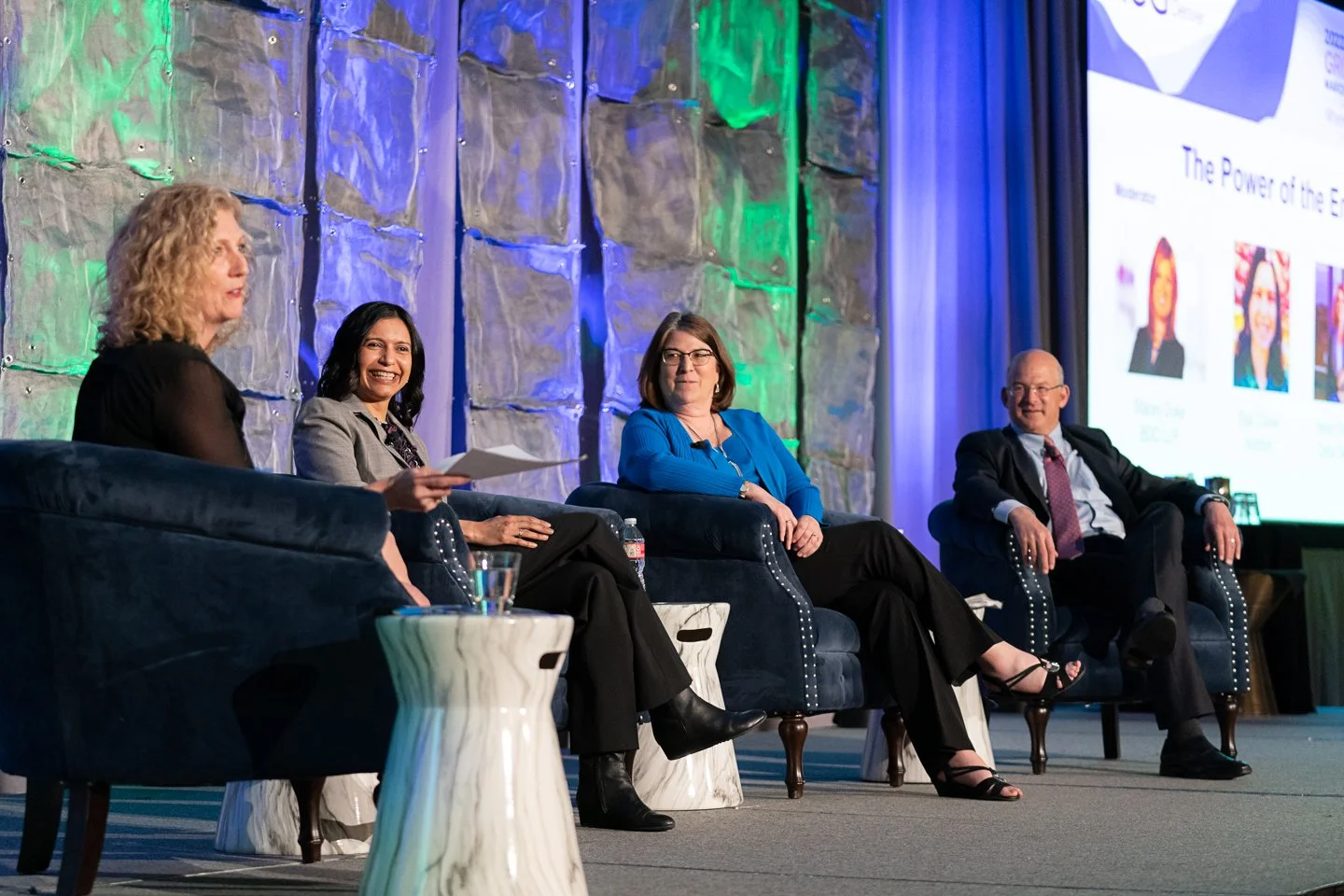
  • Power of the employee panel discussion

    I was honored to represent #HuWork on a panel discussion centered on the “Power of the Employee”, at the #ACG 2022 Rocky Mountain Corporate Growth Conference.

    Two of the ideas discussed, along with my views about them were: 

    – HOW TO DEAL WITH THE GREAT RESIGNATION? Culture trumps compensation now. Be proactive with “stay” interviews to see what parts of the employee experience need some attention.

    – MANDATE 100% BACK TO THE OFFICE? Only if critical for their role. Shift from thinking about the office as a traditional workplace, to a hub for human connection. Team Leaders need to get employees excited to come back, not force them!

    I would love to hear your take on these topics and what your employer is doing right now.

    Warmly, 

    Bijal

    The intent of these emails is to provide different perspectives, ideas, and insights as you navigate the path forward for yourself, your team, your organization, and your family.

    Click here if you were forwarded this email and would like to sign up to receive my emails. You may unsubscribe at any time.

    Bijal Choksi, MA, CHPC, ACC

    bijal@huworkteam.com

    Follow HuWork on LinkedIn
  • Human-centered leadership talk at Wharton

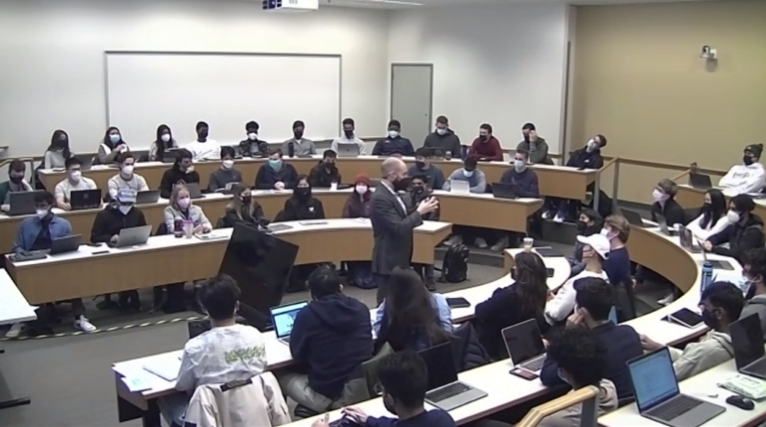
    I was honored to have been asked to give a guest lecture at The Wharton School again this semester. I was virtual and the class was in person with the professor fielding questions. I had a blast conversing with students about what motivates them, identifying their strengths, and how to keep team members engaged. I also shared a framework HuWork developed on how to be a HUMAN-CENTERED LEADER. This approach leads to happier, more engaged employees who STAY. Because compensation is only part of the story. According to recent studies, compensation is not the main reason people are resigning right now – it’s their employee experience. And the day-in, day-out employee experience is determined overwhelmingly by their direct boss. So leadership style at all levels of an organization MATTERS.

    The human-centered leadership framework centers on three concepts:

    ✅ CONNECT: schedule weekly 1:1 check-ins with each team member. These conversations should be person-focused, not task-focused

    ✅ ASK: ask questions to understand the what makes each of your team members unique: motivation, obstacles, history, tasks they love/loathe

    ✅ ELEVATE: customize the role as much as possible so it highlights the employee’s strengths and focuses on what they love doing at work (for at least 20% of their role)

    Reach out if you are curious and want more details. And I would love to hear your ideas on how to keep employees happy and engaged at work in today’s VUCA world.

    Warmly, 

    Bijal

    The intent of these emails is to provide different perspectives, ideas, and insights as you navigate the path forward for yourself, your team, your organization, and your family.

    Click here if you were forwarded this email and would like to sign up to receive my emails. You may unsubscribe at any time.

    Bijal Choksi, MA, CHPC, ACC

    bijal@huworkteam.com

    Follow HuWork on LinkedIn
  • Love your workplace

    One theme I’ve noticed during my years of coaching and consulting is that workplaces are generally not seen as a good thing. If we were giving people’s relationship to work a grade, it would be C+ at best. Who reading this would be happy with a C+? 

    I recently attended a webinar hosted by Harvard Business Review featuring Marcus Buckingham, an expert on workplace happiness and founder of the StandOut strengths assessment. He said something that resonated with my observations: People don’t feel nourished at work.

    That is what has led to “The Great Resignation” in our society, or more accurately, according to Marcus, “THE GREAT REASSESSMENT.” People are asking themselves, “What is work doing for me psychologically?”

    So what can you do about this if you are worried about losing people on your team? Or if you yourself are considering leaving, and want to enjoy work more? In both instances, the work to turn it around really begins with YOU. If you can LOVE at least 20% of your time at work, you will be more engaged. When the number tips below 20%, even slightly, people start to become disengaged. But at least some of this is IN YOUR CONTROL. How can you put a different spin on things or change your mindset so the uninteresting and routine tasks become more interesting and engaging? 

    Additionally, leaders, whether for teams, departments, or companies, need to ask themselves, “Why do we deserve really good employees?” And then use those answers to recalibrate efforts.

    With remote working, alternating days in the office, and virtual meetings becoming the “norm”, it’s a great time to reassess what’s working and not working for you. I challenge you to come up with:

    • Three things you LOVE about your workplace. The view from your office, the difference you are making with clients, the flexibility, etc. 

    • Three things you would like to CHANGE. Shorter commute, fewer interruptions from colleagues, getting out of your cubicle, etc.

    • Three ways you can make your routine tasks more ENGAGING. Meet a colleague for coffee while you each respond to emails, plan walking meetings, set aside a specific time each day/week for the least desirable tasks, etc.

    Warmly, 

    Bijal

    The intent of these emails is to provide different perspectives, ideas, and insights as you navigate the path forward for yourself, your team, your organization, and your family.

    Click here if you were forwarded this email and would like to sign up to receive my emails. You may unsubscribe at any time.

    Bijal Choksi, MA, CHPC, ACC

    bijal@huworkteam.com

    Follow HuWork on LinkedIn

  • #TeamCulture

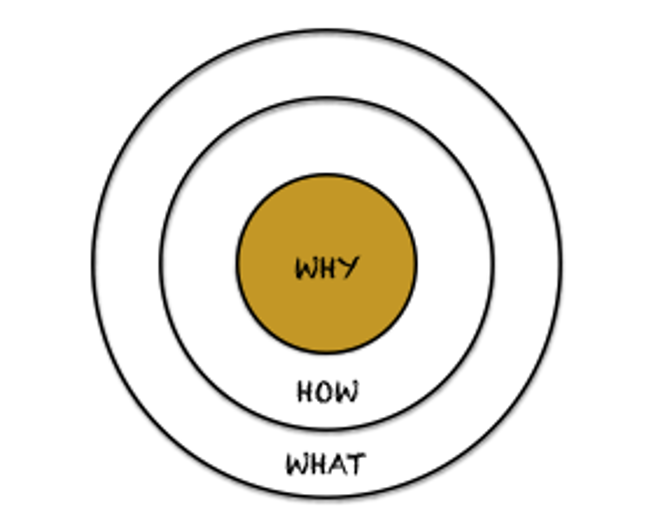
    I recently facilitated my first in-person workshop after nearly 18 months of virtual “zoomsites” and workshops. Yeehaw! (We were in Nashville.) The main theme for the leadership team was RECONNECTING with each other, but the team also wanted to RESET how they work together. To accomplish this,  we leveraged Simon Sinek’s Golden Circle concept, with the team “WHY” in the middle, followed by the “WHAT” and the “HOW”. 

    The team came up with an inspirational WHY, or purpose statement, that the rest of the department could rally around and feel proud of. Sample WHY statements include: “We accelerate the growth of our people to their full potential.” “We innovate and disrupt the status quo to bring efficiency and humanity to our customers.”

    The WHAT centered around determining 2022 priorities. But a distinguishing factor we considered was what priorities live up to the WHY statement. 

    The HOW is about the team culture, how they show up. We began by taking a real-time assessment of team dynamics using an anonymous online survey, and identified a big gap for trust and collaboration. This led to a vulnerable conversation about what steps the leadership team members could take to improve trust and collaboration. HOW do they need to show up? I asked them to come up with 5-10 hashtags that succinctly summarize their most important operating principles and values. One of them was #WeAreBetterTogether. 

    I have found that companies put so much focus on the WHAT – the projects and tasks. But not enough on the HOW – the values and culture. If you were going to craft a hashtag describing your ideal team culture, what would it be?

    Warmly, 

    Bijal

    The intent of these emails is to provide different perspectives, ideas, and insights as you navigate the path forward for yourself, your team, your organization, and your family.

    Click here if you were forwarded this email and would like to sign up to receive my emails. You may unsubscribe at any time.

    Bijal Choksi, MA, CHPC, ACC

    bijal@huworkteam.com

    Follow HuWork on LinkedIn
  • Don’t let power corrupt you

    In Harvard Business Review’s October 2021 issue, the topic of exploiting POWER was explored. This reminded me of an interview I did with UC Berkeley psychology professor Dr. Dacher Keltner when the #metoo movement was getting underway. Dr. Keltner has done extensive research on the concept of power and has published a book called “The Power Paradox”.

    What is the POWER PARADOX? It is the irony that most people gain power by advancing the interests of people within an organization or a social network, but then get sidetracked by their own DESIRES and SELF INTERESTS. This can lead to unethical, impulsive behavior that lacks empathy and humanness. In other words, they miss the fine line between using power for good, and using power for self interest.

    How does this happen? Individuals usually learn how to manage power by observing those above them. If they work for someone who often abuses power, they are more likely to end up learning those bad behaviors themselves. They may even determine that this is the new normal (sigh). 

    One idea coming out of Dr. Keltner’s book on how to counter abuse of power is to align as a team about what a CULTURE OF RESPECT really means. And I’m talking about going beyond the list of generic values, like inclusivity, on a plaque on a wall. That’s a start, but aim to get down to the actual BEHAVIORS you want to see. For example, at Kaiser Permanente these behaviors include: you don’t swear at your subordinates and you don’t interrupt them. The takeaway –  make talking about expected behaviors and use of power part of the conversation that happens at work.

    Warmly, 

    Bijal

    The intent of these emails is to provide different perspectives, ideas, and insights as you navigate the path forward for yourself, your team, your organization, and your family.

    Click here if you were forwarded this email and would like to sign up to receive my emails. You may unsubscribe at any time.

    Bijal Choksi, MA, CHPC, ACC

    bijal@huworkteam.com

    Follow HuWork on LinkedIn

  • Exploring other career options?

    According to recent statistics, 70% of the workforce is actively looking for a job change. That’s a HUGE number!

    For managers, luckily before an employee starts an active job search, there are subtle signs of disengagement:

    • Change in attitude – negativity, critical of the team/company/position

    • Change in activity – reduced productivity, different work habits

    • Breakdown in communication and/or relationships

    • Apparent complacency, lack of enthusiasm, waning commitment, withdrawn 

    If you are a leader and are beginning to notice any of these behaviors, don’t delay! Have a conversation with your employee immediately. Share some of the behaviors you have noticed and inquire as to  “what’s up?” You may also ask if they feel they are adding value, what do they need at work, what are their growth plans?

    On the flipside, if you are the person exploring other career options, I’m speaking on a career panel Tuesday, November 16 to support women who are in a job search, contemplating a career change, or feeling burnout from work/family demands of the past 18 months. You can learn more and sign up here.

    Warmly, 

    Bijal

    The intent of these emails is to provide different perspectives, ideas, and insights as you navigate the path forward for yourself, your team, your organization, and your family.

    Click here if you were forwarded this email and would like to sign up to receive my emails. You may unsubscribe at any time.

    Bijal Choksi, MA, CHPC, ACC

    bijal@huworkteam.com

    Follow HuWork on LinkedIn

  • The importance of a personal Board of Advisors

    This year, I’ve had the privilege of helping facilitate a women’s circle that provided some structure to think through issues and support one another. One of our first sessions centered on the concept of developing one’s own personal BOARD OF ADVISORS. Companies engage Boards to help them make the right decisions, so why don’t we as individuals? A personal Board of Advisors is a group of respected individuals who will help you thrive. I’ve mainly applied this concept for career development, but there’s no reason it couldn’t work for health or general life improvement as well. 

    The central theme to one’s BOA is PERSONAL RELATIONSHIPS. There is a reciprocity involved; we are enriching our advisors’ lives in some way, while they are providing support to us.

    The most common question I’m asked about this concept is, “What value can I add to someone who is way ahead of me in their career?”

    Here are a few ways you can help your Board of Advisors:

    • CONNECT: Connecting people is a powerful way to help others. You can introduce them to someone to fill a need they have, or connect them to a resource such as a book or article.

    • INVITE: I have found time and again that as people gain power, they can also become more isolated. You can invite one of your board members to a new restaurant, a group happy hour, or an event you are involved with such as a non-profit fundraiser.

    • BE AN EXPERT: Catalog your own unique expertise, such as social media, knowing the newest restaurants and events, your interest in art, or whatever you are already interested and knowledgeable about. Then, when you ask your advisor what challenges they have going on, you’ll already have a few areas in which you might be able help.

    This is not a science. Your BOA will ebb and flow; but, when you are in a pickle of a situation, it is comforting to know you have people with specific expertise to whom you can turn. My advice: get started this quarter filling out the BOA template, especially the list of 5 people to be on your BOA. Reach out to each one to say hello and subtly gauge their openness to engage in conversations that matter. 

    If you are ready to get started, here is a template to help you build your own Board of Advisors. 

    Reach out if you have any questions.

    Warmly, 

    Bijal

    The intent of these emails is to provide different perspectives, ideas, and insights as you navigate the path forward for yourself, your team, your organization, and your family.

    Click here if you were forwarded this email and would like to sign up to receive my emails. You may unsubscribe at any time.

    Bijal Choksi, MA, CHPC, ACC

    bijal@huworkteam.com

    Follow HuWork on LinkedIn