Category: Coaching for Coaches

  • #TeamCulture

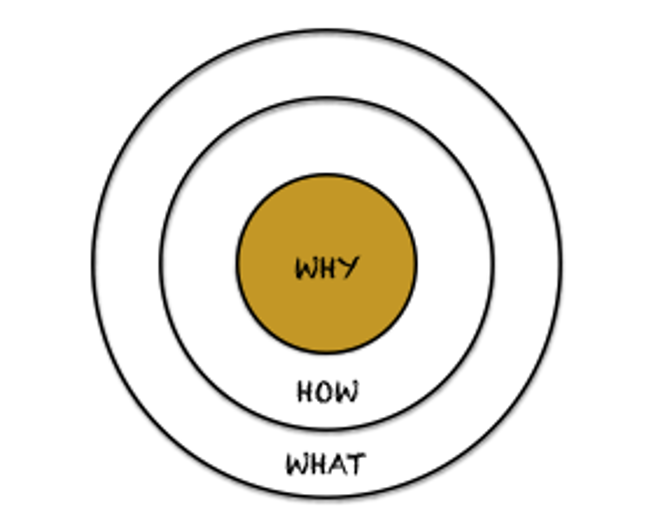
    I recently facilitated my first in-person workshop after nearly 18 months of virtual “zoomsites” and workshops. Yeehaw! (We were in Nashville.) The main theme for the leadership team was RECONNECTING with each other, but the team also wanted to RESET how they work together. To accomplish this,  we leveraged Simon Sinek’s Golden Circle concept, with the team “WHY” in the middle, followed by the “WHAT” and the “HOW”. 

    The team came up with an inspirational WHY, or purpose statement, that the rest of the department could rally around and feel proud of. Sample WHY statements include: “We accelerate the growth of our people to their full potential.” “We innovate and disrupt the status quo to bring efficiency and humanity to our customers.”

    The WHAT centered around determining 2022 priorities. But a distinguishing factor we considered was what priorities live up to the WHY statement. 

    The HOW is about the team culture, how they show up. We began by taking a real-time assessment of team dynamics using an anonymous online survey, and identified a big gap for trust and collaboration. This led to a vulnerable conversation about what steps the leadership team members could take to improve trust and collaboration. HOW do they need to show up? I asked them to come up with 5-10 hashtags that succinctly summarize their most important operating principles and values. One of them was #WeAreBetterTogether. 

    I have found that companies put so much focus on the WHAT – the projects and tasks. But not enough on the HOW – the values and culture. If you were going to craft a hashtag describing your ideal team culture, what would it be?

    Warmly, 

    Bijal

    The intent of these emails is to provide different perspectives, ideas, and insights as you navigate the path forward for yourself, your team, your organization, and your family.

    Click here if you were forwarded this email and would like to sign up to receive my emails. You may unsubscribe at any time.

    Bijal Choksi, MA, CHPC, ACC

    bijal@huworkteam.com

    Follow HuWork on LinkedIn
  • Don’t let power corrupt you

    In Harvard Business Review’s October 2021 issue, the topic of exploiting POWER was explored. This reminded me of an interview I did with UC Berkeley psychology professor Dr. Dacher Keltner when the #metoo movement was getting underway. Dr. Keltner has done extensive research on the concept of power and has published a book called “The Power Paradox”.

    What is the POWER PARADOX? It is the irony that most people gain power by advancing the interests of people within an organization or a social network, but then get sidetracked by their own DESIRES and SELF INTERESTS. This can lead to unethical, impulsive behavior that lacks empathy and humanness. In other words, they miss the fine line between using power for good, and using power for self interest.

    How does this happen? Individuals usually learn how to manage power by observing those above them. If they work for someone who often abuses power, they are more likely to end up learning those bad behaviors themselves. They may even determine that this is the new normal (sigh). 

    One idea coming out of Dr. Keltner’s book on how to counter abuse of power is to align as a team about what a CULTURE OF RESPECT really means. And I’m talking about going beyond the list of generic values, like inclusivity, on a plaque on a wall. That’s a start, but aim to get down to the actual BEHAVIORS you want to see. For example, at Kaiser Permanente these behaviors include: you don’t swear at your subordinates and you don’t interrupt them. The takeaway –  make talking about expected behaviors and use of power part of the conversation that happens at work.

    Warmly, 

    Bijal

    The intent of these emails is to provide different perspectives, ideas, and insights as you navigate the path forward for yourself, your team, your organization, and your family.

    Click here if you were forwarded this email and would like to sign up to receive my emails. You may unsubscribe at any time.

    Bijal Choksi, MA, CHPC, ACC

    bijal@huworkteam.com

    Follow HuWork on LinkedIn

  • Emotional Valence

    Many of you know I grew up in New York, so the 20 year anniversary of 9/11 (how can it have been 20 years already?) is still a weight I’m carrying around, as well as a shadow over my feelings about NY. 

    This emotional charge of being drawn to or away from something is known in psychology as EMOTIONAL VALENCE. It’s referring to the intrinsic attractiveness (Positive Valence) or aversiveness (Negative Valence) of events, people, things, or situations. 

    (For my fellow science nerds, valence is a chemistry term describing the bonding of atoms; positive, if its own electrons are used in forming the bond, or negative, if another atom’s electrons are used. For example, a carbon atom can share four of its electrons with other atoms and therefore has a valence of +4.)

    On a lighter note, seeing the #1 ranked men’s tennis player, Novak Djokovic, lose his temper and smash his tennis racket on the ground at the US Open Finals on Sunday changed my emotional valence towards him (not that he cares what I think!) To counteract a negative emotional valence towards someone you may actually interact with, here is what I try to do:

    • Ground myself: even 30 seconds alone to breathe and get centered often changes the interaction, and makes me less reactive.

    • Lower my expectations: this has led to less disappointment when the other person has a pattern that hasn’t met previous expectations. 

    • Internally recognize something positive about the person or situation: our minds can have a tendency to fixate on what is wrong, so counteract with something like, “He is always on time for meetings.”

    • Verbalize something I genuinely appreciate about the other person: Such as, “I love how you are able to say what’s on your mind regardless of who’s in the room.”

    When relating to a situation or experience beyond your control, the key to shifting your emotional valence is to focus on the positive. What techniques do you use to reframe negative feelings?

    Warmly, 

    Bijal

    The intent of these emails is to provide different perspectives, ideas, and insights as you navigate the path forward for yourself, your team, your organization, and your family.

    Click here if you were forwarded this email and would like to sign up to receive my emails. You may unsubscribe at any time.

    Bijal Choksi, MA, CHPC, ACC

    bijal@huworkteam.com

    Follow HuWork on LinkedIn

  • The importance of a personal Board of Advisors

    This year, I’ve had the privilege of helping facilitate a women’s circle that provided some structure to think through issues and support one another. One of our first sessions centered on the concept of developing one’s own personal BOARD OF ADVISORS. Companies engage Boards to help them make the right decisions, so why don’t we as individuals? A personal Board of Advisors is a group of respected individuals who will help you thrive. I’ve mainly applied this concept for career development, but there’s no reason it couldn’t work for health or general life improvement as well. 

    The central theme to one’s BOA is PERSONAL RELATIONSHIPS. There is a reciprocity involved; we are enriching our advisors’ lives in some way, while they are providing support to us.

    The most common question I’m asked about this concept is, “What value can I add to someone who is way ahead of me in their career?”

    Here are a few ways you can help your Board of Advisors:

    • CONNECT: Connecting people is a powerful way to help others. You can introduce them to someone to fill a need they have, or connect them to a resource such as a book or article.

    • INVITE: I have found time and again that as people gain power, they can also become more isolated. You can invite one of your board members to a new restaurant, a group happy hour, or an event you are involved with such as a non-profit fundraiser.

    • BE AN EXPERT: Catalog your own unique expertise, such as social media, knowing the newest restaurants and events, your interest in art, or whatever you are already interested and knowledgeable about. Then, when you ask your advisor what challenges they have going on, you’ll already have a few areas in which you might be able help.

    This is not a science. Your BOA will ebb and flow; but, when you are in a pickle of a situation, it is comforting to know you have people with specific expertise to whom you can turn. My advice: get started this quarter filling out the BOA template, especially the list of 5 people to be on your BOA. Reach out to each one to say hello and subtly gauge their openness to engage in conversations that matter. 

    If you are ready to get started, here is a template to help you build your own Board of Advisors. 

    Reach out if you have any questions.

    Warmly, 

    Bijal

    The intent of these emails is to provide different perspectives, ideas, and insights as you navigate the path forward for yourself, your team, your organization, and your family.

    Click here if you were forwarded this email and would like to sign up to receive my emails. You may unsubscribe at any time.

    Bijal Choksi, MA, CHPC, ACC

    bijal@huworkteam.com

    Follow HuWork on LinkedIn

  • How to channel a higher cause at work

    Looking for a motivation reboot at work or ideas on how to be an inspirational leader? I’d recommend checking out Simon Sinek’s The Infinite Game.  

    Simon takes an opposing view to Milton Friedman, the economist who posited that business’ sole responsibility is making profit. Simon argues that in addition to making profit, organizations should provide broader value to society, namely: 

    • Advance a PURPOSE: offer people a sense of belonging and a feeling that their lives and their work have value beyond the physical work

    • PROTECT people: operate our companies in a way that protects our workforce, our clients, and the work environment.

    • Generate PROFIT: money is fuel for a business to remain viable and to continue advancing the first two priorities

    According to Simon, any leader who wants to adopt this infinite mindset of running a business or team must follow five essential practices:

    1. Advance a JUST CAUSE: find a long-term cause the team can rally around

    2. Build TRUSTING teams: trust is key for engagement and collaboration

    3. STUDY your worthy rivals: keep tabs on your competition to understand the landscape

    4. Prepare for existential FLEXIBILITY: The capacity to initiate an extreme disruption to a business model or a strategic course in order to more effectively advance a just cause. 

    5. Demonstrate the COURAGE to lead: The willingness to take a risk for the good of an unknown future. Just like CVS deciding to stop selling cigarettes, even though they knew it would piss off Wall St. (BTW, the stock price only took a brief dip before recovering and gaining.)

    LEADERS especially must model the behavior they want to see, actively incentivize the kinds of behaviors that build trust, and give people the responsible freedom and the support they need to flourish in their jobs. It is a combination of what we value and how we act that sets the culture of a company. 

    CULTURE = VALUES + BEHAVIOR

    If leaders place an excess of stress on people to meet the numbers, and offer lopsided incentive structures, they risk creating an environment in which near- term performance and resources are prioritized, while long-term performance, trust, psychological safety, and the will of the people decline.

    Exhibiting the QUALITIES of leadership is what makes someone an effective leader. Qualities like honesty, integrity, courage, resiliency, perseverance, judgment and decisiveness. Ideally leaders would measure the inputs and the behaviors, rather than the outcomes.

    It’s very common for people nearing the end of their corporate careers to start foundations or distribute their wealth to charity, working to fulfill a desire to give back and do something more philanthropic. But purpose is not something that we need only find after a successful career. There are ways to infuse higher purpose in our everyday lives and work.

    Questions to ask yourself:

    • Am I just working for the money? 

    • How might I change my mindset at work to fulfill a broader goal I have? E.g,. treating people well, inspiring others to give their best, etc.

    • Should I move on to fulfill my desire to work for a cause bigger than myself?

    I’m here as a resource if you want to talk through your particular situation with a quick 20-min call. Interesting to note: about 50% of my coaching clients who originally wanted help finding a new career, end up renewed and remotivated in their existing role after a few coaching sessions. We look at how they are spending their time, what tasks they excel at, how they might improve their relationships with peers and their boss, and define their unique professional brand, leadership style, and goals.

    Warmly, 

    Bijal

    The intent of these emails is to provide different perspectives, ideas, and insights as you navigate the path forward for yourself, your team, your organization, and your family.

    Click here if you were forwarded this email and would like to sign up to receive my emails. You may unsubscribe at any time.

    Bijal Choksi, MA, CHPC, ACC

    bijal@huworkteam.com

    Follow HuWork on LinkedIn

  • When less is more

    Pablo Picasso said art is the “elimination of the unnecessary.” However, most people will instinctually ADD versus SUBTRACT something. For example, if engagement is waning at work, a manager may increase the number of team meetings. While adding more can be a good thing (feel free to keep bringing home flowers S!)….when facing decision points, I’m starting to consider removing something as an alternative instead.

    I’m currently reading “Subtract” by Leidy Klotz, who makes a nice case for remembering that subtraction can be even more impactful than addition. In fact, I’m now a little obsessed with how life might improve with less: less complexity, less switching gears, less clutter, fewer obligations. Maybe even having fewer Clients, but going deeper with the ones that truly resonate. 

    And if the words “subtract”, “remove”, or “reduce” have a negative connotation to you, you’re not alone. Try substituting “reveal”, “clean”, “carve”, “create”, “construct”, or “streamline” to override a potential sense of loss. 

    If you want to learn more about the science and research behind our drive to add, check out this article.

    Warmly, 

    Bijal

    The intent of these emails is to provide different perspectives, ideas, and insights as you navigate the path forward for yourself, your team, your organization, and your family.

    Click here if you were forwarded this email and would like to sign up to receive my emails. You may unsubscribe at any time.

    Bijal Choksi, MA, CHPC, ACC

    bijal@huworkteam.com

    Follow HuWork on LinkedIn

  • Using LOVE to connect

    On Friday, HuWork is hosting a round table on Coffee and Conversation: Make Work More Human, to explore what it takes to be a more human-centered organization. We’ll talk about behaviors and practices that are going well in your organization, and things that you’d like to see changed. If you are interested, sign up ASAP as we only have 3 more spots available.

    One tenet of being more human at work involves an emotion people don’t always associate with work: LOVE. By love, I’m referring to our underlying motivation and sense of connection with other human-beings at work. I translate this LOVE at work into three core values: SERVE, LEARN, and CONNECT:

    1. SERVE: This is about our mindset: How can I come from a place of service vs. my own agenda?

    2. LEARN: How would learning something, whether it’s from books, articles, or conversations, increase the value and experience I can provide to others? What can I share with others to spread the love and ease their path? Can I make an introduction or share a resource?

    3. CONNECT: How can I build a more H2H or human-to-human connection with everyone, even people at work? How can I look beyond the task and focus on building a meaningful, reciprocal relationship?

    I invite you to take HuWork’s Human Factor Assessment to highlight the areas where you and your company are shining and think about changes to consider putting in place – whether you are working as a people manager, an individual contributor, or influencing change as an HR leader or consultant.

    Warmly, 

    Bijal

    The intent of these emails is to provide different perspectives, ideas, and insights as you navigate the path forward for yourself, your team, your organization, and your family.

    Click here if you were forwarded this email and would like to sign up to receive my emails. You may unsubscribe at any time.

    Bijal Choksi, MA, CHPC, ACC

    bijal@huworkteam.com

    Follow HuWork on LinkedIn

  • Returning to a new “normal”

    Your organization is probably thinking about returning to the office, using a hybrid approach, or perhaps working from home permanently – all of these bring opportunities to think about new and better ways of working.  

     The 60-30-10 rule for effective teamwork, discovered by researcher J. Richard Hackman, states the following about a team’s success: 

    • 60% depends on prework, or activities before the actual work, 

    • 30%  can be linked to the initial launch (or relaunch) of the team, and

    • Only 10% is dependent on the day-to-day teamwork

    Anytime there is a major change to the team: new location, major project, new team members, I encourage you to hold a brief 60-90 minute launch session with the team. It can even be spread out over two sessions. But it’s critical that every single team member is present.  

    Using the image of a funnel – starting wide, then narrowing down,  include at a minimum in your agenda:

    1. VISION: Everyone must be crystal clear where the team is headed. Discuss where the team fits in with the broader company vision and the team shared goals.

    2. ROLES:  Everyone needs to have a shared understanding of how each person fits in and a frank discussion of potential obstacles.

    3. RESOURCES:  What resources are needed? (information, budget, people, etc.)

    4. NORMS: How will team members interact? What are the communication expectations, such as responses to emails in ”X” hours, process for raising issues, what mistakes are acceptable, what mistakes are unacceptable, etc.

    Use the (re)launch as an opportunity to get people excited, build trust, and bring focus back to the team’s goals.

    For more ideas, please join me on April 23 for Coffee and Conversation: Make Work More Human, to explore what it takes to be a human-centered organization. We’ll talk about behaviors and practices that are going well in your organization, and things that you’d like to see changed. 

    I invite you to take HuWork’s Human Factor Assessment ahead of time to highlight the areas where your company is shining and think about changes to consider putting in place – whether you are working as a people manager, an individual contributor, or influencing change as an HR leader or consultant.

    To join this virtual conversation on Friday, April 23 at 12pm MDT, please click here to register. I will email the Zoom link the day before the event.

    Warmly, 

    Bijal

    The intent of these emails is to provide different perspectives, ideas, and insights as you navigate the path forward for yourself, your team, your organization, and your family.

    Click here if you were forwarded this email and would like to sign up to receive my emails. You may unsubscribe at any time.

    Bijal Choksi, MA, CHPC, ACC

    bijal@huworkteam.com

    Follow HuWork on LinkedIn

  • Inspiring Others

    in·spi·ra·tion /ˌinspəˈrāSH(ə)n/:  the process of being mentally stimulated to do or feel something.

    Some days are easier than others to find your own inspiration. If you are in charge of inspiring others to action, it can feel that much more overwhelming. I recently gave a guest lecture at Wharton on the topic of how to inspire employees. 

    Here are my three key takeaways:

    1. CONNECT: find ways to meaningfully connect with your team members one-on-one. Ideally, at least 15 minutes weekly.

    2. ASK: don’t assume to know what motivates and what gets in the way for someone else. Ask each person. Perhaps in the weekly one-on-one mentioned above.

    3. ELEVATE: you can teach skills and knowledge, but you can’t teach a strength. A strength is an activity that you look forward to, feel energized by, and feel proud about afterwards. Focus on each person’s strengths, and you crowd out their weaknesses and elevate their work experience.

    And once you do the above, do it again! As Aristotle said, “Excellence is not just one act but what you repeatedly do.” 

    Warmly, 

    Bijal

    The intent of these emails is to provide different perspectives, ideas, and insights as you navigate the path forward for yourself, your team, your organization, and your family.

    Click here if you were forwarded this email and would like to sign up to receive my emails. You may unsubscribe at any time.

    Bijal Choksi, MA, CHPC, ACC

    bijal@huworkteam.com

    Follow HuWork on LinkedIn

  • Soph-what?

    My older son is a sophomore in high school, but I had never heard of the term sophrology until recently. The word sophrology comes from the Greek words sos (harmonious and serene), phren (consciousness), and logos (the science of or to study). Essentially, sophrology is the science of consciousness in harmony. In practical terms, sophrology includes some mental and physical exercises, like a guided visualization meditation and gentle movement. 

    Even before the pandemic, 83% of Americans stressed over at least one work-related issue. That equates to 8 out of 10 of your coworkers stressing about work! Layer on the pandemic, and it’s no wonder people are experiencing mental health strains. 

    Below is a 2-3 minute visualization exercise that can change your state of mind dramatically. If you want someone to guide you through a meditation, I teach a free 25-minute guided meditation on the first Wednesday of every month that includes a similar visualization. Sign up here.

    Visualizing Happiness Exercise: 

    1. Close your eyes and think of a place, real or imagined, that brings you happiness.

    2. Visualize the sounds, smells, look, and feel of this place.

    3. Inhale and imagine breathing in calm waves of serenity.

    4. Exhale and allow the good feelings to wash over your body.

    Scheduling in sophrology-type practices can mitigate a stress response, attain the calm needed to respond skillfully to others, and help prevent burnout. BUT you must PLAN to do it. It is experiential, so you must participate in the practices, not just read about them! I suggest putting a recurring appointment on your calendar right now to “RECHARGE”. You won’t be sorry.

    Warmly, 

    Bijal

    The intent of these emails is to provide different perspectives, ideas, and insights as you navigate the path forward for yourself, your team, your organization, and your family.

    Click here if you were forwarded this email and would like to sign up to receive my emails. You may unsubscribe at any time.

    Bijal Choksi, MA, CHPC, ACC

    bijal@huworkteam.com

    Follow HuWork on LinkedIn