
Author: admin

  • How to communicate powerfully

    Communication skills can make or break relationships, whether at work or personal life. Do any of these situations apply to you?

    •  You think you are communicating clearly, but it doesn’t seem others are on the same page.

    • You take the initiative on a project, but then get frustrated when your manager indicates it was wasted effort.

    • Conversations don’t go in the direction you were hoping.

    • You find yourself having the same conversations with certain people without resolution.

    • People often seem defensive or triggered in conversation with you, especially when you are just asking clarifying questions.

    If you identify with any of those situations, come attend a 15-minute Facebook live on 12/19 at 12pm MST with me and Rod Francis, the founder of the Emergent Coach Training program. We will be discussing practical communication skills such as the art of asking powerful questions and active listening skills. We will also share details about a new supportive community for individuals wanting to incorporate coaching skills into their profession, whether they are in a coaching role or not. Tune in here!

    In addition, another colleague, Sherry Trebes, will be going live on Instagram this Thursday, December 15 at 12pm MST on how coaching skills can improve all areas of one’s life. Follow @interactualizer on Instagram for this event. This will be first in a series of quick, live learning events.


    I hope to see you there!

    Warmly, 

    Bijal

    The intent of these emails is to provide different perspectives, ideas, and insights as you navigate the path forward for yourself, your team, your organization, and your family.

    Click here if you were forwarded this email and would like to sign up to receive my emails. You may unsubscribe at any time.

    Bijal Choksi, MA, CHPC, ACC

    bijal@huworkteam.com

    Follow HuWork on LinkedIn

  • Power of the employee panel discussion

    I was honored to represent #HuWork on a panel discussion centered on the “Power of the Employee”, at the #ACG 2022 Rocky Mountain Corporate Growth Conference.

    Two of the ideas discussed, along with my views about them were: 

    – HOW TO DEAL WITH THE GREAT RESIGNATION? Culture trumps compensation now. Be proactive with “stay” interviews to see what parts of the employee experience need some attention.

    – MANDATE 100% BACK TO THE OFFICE? Only if critical for their role. Shift from thinking about the office as a traditional workplace, to a hub for human connection. Team Leaders need to get employees excited to come back, not force them!

    I would love to hear your take on these topics and what your employer is doing right now.

    Warmly, 

    Bijal

    The intent of these emails is to provide different perspectives, ideas, and insights as you navigate the path forward for yourself, your team, your organization, and your family.

    Click here if you were forwarded this email and would like to sign up to receive my emails. You may unsubscribe at any time.

    Bijal Choksi, MA, CHPC, ACC
    bijal@huworkteam.com

    Follow HuWork on LinkedIn

  • 16 Tried-And-True Ways To Break Out Of Creative Boredom

    We all get in stuck at times, for a variety of reasons. The faster you can break out of creative boredom, the more productive you will be. In this article Bonnie shares her solution for overcoming it, along with 15 of her peers from the Forbes Coaches Council.

  • 3D’s for loving life, including work

    Lately, my clients have been lamenting about all the things they do not like about their jobs. Newsflash – no one likes every task required for their role. When we dig into what percentage of their day is filled with tasks they loathe, there’s a magic number I’m looking for. If we determine over 50% of their week is filled with tasks they dread, that’s a big red flag for me. That employee is on track to be disengaged and start looking for a new job.

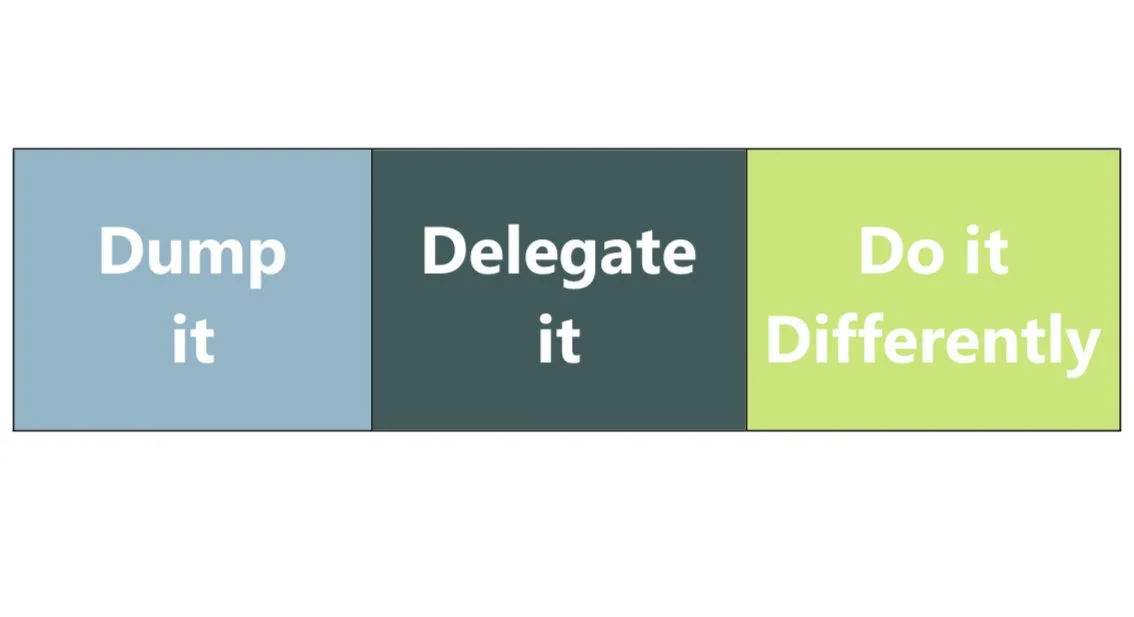
    The 3D framework below will provide you with a cheat sheet for what to do with tasks you dislike.

    #1: DUMP IT: Can you eliminate the task? What will be the repercussions? Will anyone even notice? One client stopped scheduling an unproductive meeting, and no one questioned her.  Another client decreased her attendance at a recurring meeting by 50% and the only consequence was that her mood and productivity improved.

    #2: DELEGATE IT: Might someone else be the better person to do the task? Or perhaps just getting help from someone for a part of the task would help it seem less dreadful. With today’s apps, platforms, and AI, you may also be able to delegate some tasks to technology. Outsourcing to a virtual contractor can be another efficient and cost-effective option for tasks you loathe. 

    #3: DO IT DIFFERENTLY: How might you enjoy the task more? Can you leverage a strength of yours? How might you need to rethink your role to include these tasks? A manager I was coaching, just wanted to get his “work” done, and not deal with the people-side of managing a team. Expanding his idea of a manager’s responsibilities, that his main function was to enable his team to succeed by helping each team member with obstacles, planning, or whatever else was needed, was the “aha” moment he needed to look at those people-tasks differently. Another client “batched” the tasks, setting a regular time when low energy tasks get done; such as on the first Monday of each month, 3 hours will be spent on xyz set of tasks. By doing this, those tasks aren’t hanging over you the rest of the month.

    Take time to notice the tasks that always get pushed to the bottom of your list. These are the tasks to focus on first. To tackle the tasks you put off, think of the 3D’s. Can you DUMP IT, DELEGATE IT, OR DO IT DIFFERENTLY? If so, you may be able to re-engage, focus more on the tasks you enjoy at work and, in turn, find joy once again in your job.

    Click here to download The 3D’s cheat sheet.

    Warmly, 

    Bijal

    The intent of these emails is to provide different perspectives, ideas, and insights as you navigate the path forward for yourself, your team, your organization, and your family.

    Click here if you were forwarded this email and would like to sign up to receive my emails. You may unsubscribe at any time.

    Bijal Choksi, MA, CHPC, ACC
    bijal@huworkteam.com

    Follow HuWork on LinkedIn

  • Human-centered leadership talk at Wharton

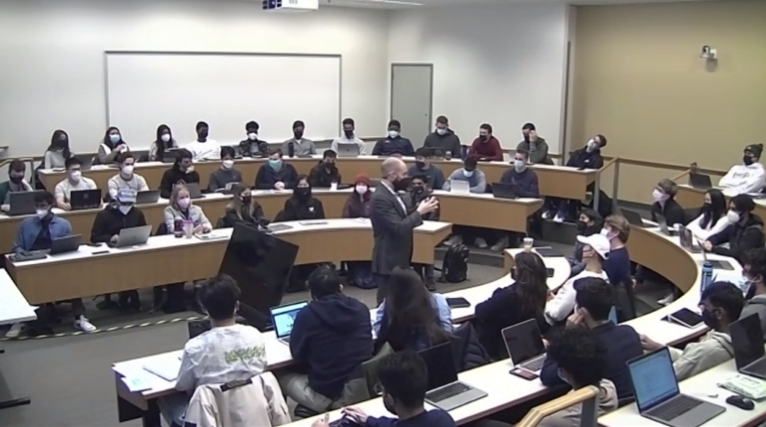
    I was honored to have been asked to give a guest lecture at The Wharton School again this semester. I was virtual and the class was in person with the professor fielding questions. I had a blast conversing with students about what motivates them, identifying their strengths, and how to keep team members engaged. I also shared a framework HuWork developed on how to be a HUMAN-CENTERED LEADER. This approach leads to happier, more engaged employees who STAY. Because compensation is only part of the story. According to recent studies, compensation is not the main reason people are resigning right now – it’s their employee experience. And the day-in, day-out employee experience is determined overwhelmingly by their direct boss. So leadership style at all levels of an organization MATTERS.

    The human-centered leadership framework centers on three concepts:

    ✅ CONNECT: schedule weekly 1:1 check-ins with each team member. These conversations should be person-focused, not task-focused

    ✅ ASK: ask questions to understand the what makes each of your team members unique: motivation, obstacles, history, tasks they love/loathe

    ✅ ELEVATE: customize the role as much as possible so it highlights the employee’s strengths and focuses on what they love doing at work (for at least 20% of their role)

    Reach out if you are curious and want more details. And I would love to hear your ideas on how to keep employees happy and engaged at work in today’s VUCA world.

    Warmly, 

    Bijal

    The intent of these emails is to provide different perspectives, ideas, and insights as you navigate the path forward for yourself, your team, your organization, and your family.

    Click here if you were forwarded this email and would like to sign up to receive my emails. You may unsubscribe at any time.

    Bijal Choksi, MA, CHPC, ACC

    bijal@huworkteam.com

    Follow HuWork on LinkedIn

  • Love your workplace

    One theme I’ve noticed during my years of coaching and consulting is that workplaces are generally not seen as a good thing. If we were giving people’s relationship to work a grade, it would be C+ at best. Who reading this would be happy with a C+? 

    I recently attended a webinar hosted by Harvard Business Review featuring Marcus Buckingham, an expert on workplace happiness and founder of the StandOut strengths assessment. He said something that resonated with my observations: People don’t feel nourished at work.

    That is what has led to “The Great Resignation” in our society, or more accurately, according to Marcus, “THE GREAT REASSESSMENT.” People are asking themselves, “What is work doing for me psychologically?”

    So what can you do about this if you are worried about losing people on your team? Or if you yourself are considering leaving, and want to enjoy work more? In both instances, the work to turn it around really begins with YOU. If you can LOVE at least 20% of your time at work, you will be more engaged. When the number tips below 20%, even slightly, people start to become disengaged. But at least some of this is IN YOUR CONTROL. How can you put a different spin on things or change your mindset so the uninteresting and routine tasks become more interesting and engaging? 

    Additionally, leaders, whether for teams, departments, or companies, need to ask themselves, “Why do we deserve really good employees?” And then use those answers to recalibrate efforts.

    With remote working, alternating days in the office, and virtual meetings becoming the “norm”, it’s a great time to reassess what’s working and not working for you. I challenge you to come up with:

    • Three things you LOVE about your workplace. The view from your office, the difference you are making with clients, the flexibility, etc. 

    • Three things you would like to CHANGE. Shorter commute, fewer interruptions from colleagues, getting out of your cubicle, etc.

    • Three ways you can make your routine tasks more ENGAGING. Meet a colleague for coffee while you each respond to emails, plan walking meetings, set aside a specific time each day/week for the least desirable tasks, etc.

    Warmly, 

    Bijal

    The intent of these emails is to provide different perspectives, ideas, and insights as you navigate the path forward for yourself, your team, your organization, and your family.

    Click here if you were forwarded this email and would like to sign up to receive my emails. You may unsubscribe at any time.

    Bijal Choksi, MA, CHPC, ACC

    bijal@huworkteam.com

    Follow HuWork on LinkedIn