
Author: admin

  • Soulful Sonder

    Today marks the 100th anniversary of the 19th Amendment, granting women the official right to VOTE in the US. But that didn’t mean all women in reality could vote. Many NON-WHITE WOMEN were still blocked from voting for years and even decades after 1920. Which brings us to the concept for today…SONDER.


    SONDER is the realization that each random passerby is living a life as vivid and COMPLEX as your own. Full of their own ambitions, struggles, biases, history, thoughts, families, interactions, feelings. Their own ecosystem of reality.


    How often do you think about another person’s true felt experience? How it would actually feel to look out at the world from their eyes, their version of reality? How might it have felt for those women in 1920 who tried to vote but were denied? What went through their minds? What were the different ways they reacted, internally and externally? What ripple effects did that experience have on their families and communities?


    We only know what we know. And we sure do know OUR OWN EXPERIENCE! And sometimes get wrapped up in it. It is not easy to step outside of ourselves and contemplate others’ experiences. The invitation is for you to join me in contemplating SONDER. When you see someone in your everyday life (mail person, co-worker, spouse, grocery store clerk), remember the word SONDER and reflect on their universe, their felt experience. Drop me a note and let me know if you have any aha’s.
     

  • What Are You Carrying Around?

    Here’s a Zen story about two celibate monks who were on a journey. One morning they came to a stream that was quite deep. There was a woman on the bank who clearly wanted to cross, but couldn’t. The older monk lifted her, walked across the stream, and put her down on the other side. The monks then continued on their way.

     That evening the younger monk was still ruminating about what happened, and eventually exclaimed with much emotion, “The rules of our religion forbid us to touch women. How could you have done that?”

     To which the older monk replied, “My son, I picked her up and set her down this morning. You have been carrying her ALL DAY.”


    Just like the younger monk, do you carry around strong, unhelpful emotions long after the event is over? Humans are unique in the animal kingdom for our obsession with the past and our fear for the future. Alas, our bodies do not know the difference between our mind’s ruminations and actual events. Both will WRECK your nervous system, chronically raise stress hormones to UNHEALTHY levels, and move you away farther away from happiness and fulfillment.


    The ANTIDOTE? TRAIN your brain to stay PRESENT in the moment…yes, THIS moment….and now THIS moment. And now here we are at THIS new moment. Just now, here, moment to moment awareness. Not constantly focusing on the past or the future, for which we have no control. Staying present and being MINDFUL stops the hamster wheel. It’s a pretty simple concept, but NOT EASY in practice.


    InnerBalance is a wearable tool that trains your brain to be present. Just weeks of short practice starts improving your neural pathways. It is a low cost, low time investment way to train your brain. One of the reasons it’s so effective is that it tracks your heart rate variability, and you can see how you are doing on an app. This allows you to make real-time adjustments to train your brain.


    I wore the InnerBalance tool while driving many years ago, and realized I was always “in the red”, aka stressed about getting to where I needed to be, whether someone would cut me off, just generally being vigilant and on edge when driving. But with the help of the tool, I trained myself to not be. It’s powerful stuff.


    And for the month of August, I’m offering the InnerBalance tool AND a 45-minute virtual instructional session with me for $199. (The InnerBalance alone is $169.) Just email me if interested.

  • If You Want Different, DO DIFFERENT

    Are you showing up in life as your BEST SELF? Do you feel STRESSED before meetings or during interactions with certain people? Are you completely spent by Friday? Do you feel like you need to FORCE yourself through your day? Are you struggling to manage a SAD life event? Are you looking for an approachable tool that can UPGRADE your life pretty quickly?


    InnerBalance from HeartMath is my chosen LIFE-MANAGEMENT TOOL, after testing many options, for BUSY professionals who want to flow more easily and effectively through life. I’ve also found it powerful before stressful situations. Just 5 minutes will broaden your perspective, lower your heartrate, and allow ideas and connections to flow. Seems MAGICAL right?


    Some of you know I lost my dad last year. And that I have sleep issues. HeartMath was the SINGLE most important TOOL I leaned on during my dad’s painful fight with cancer to help me cope better and sleep better (shockingly), all while being fully PRESENT through the full range of emotions one has during this type of life event. No denial or escape or trying to neutralize the negative emotions. During the short HeartMath sessions, I would INTENTIONALLY generate POSITIVE EMOTIONS, like GRATITUDE for having time with my dad before things got really bad, LOVE for my extended family who rallied together for support, and JOY against all odds during that time seeing childhood friends on my many visits home for ceremonies after he passed. 


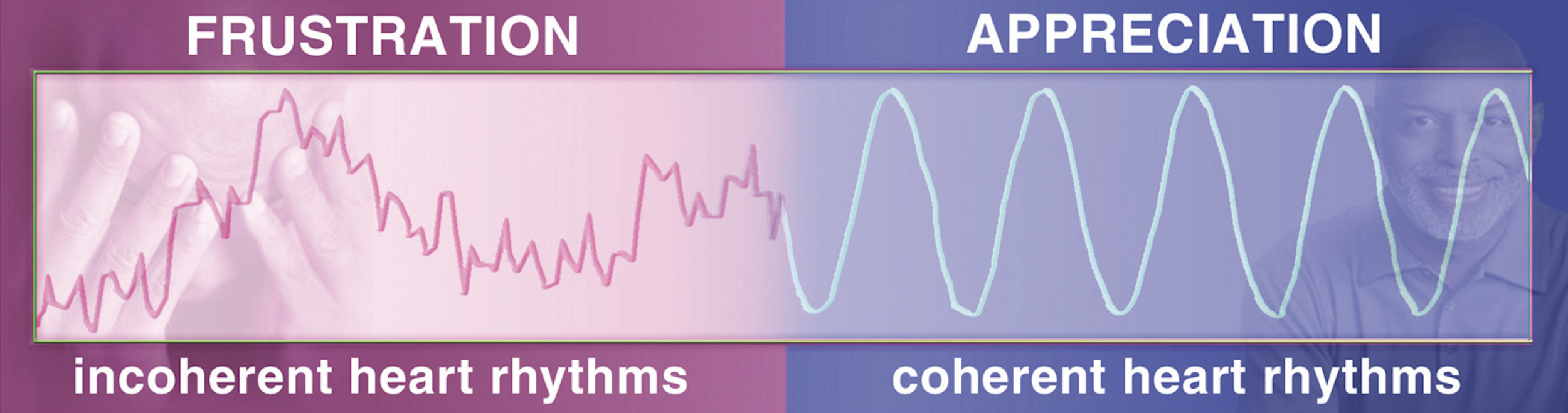
    I recently had a chat with the Lead Trainer of HeartMath South Africa. When I asked him what makes this tool so powerful, he said HeartMath’s power centers on its ability to bring people to a “coherent” state. HeartMath describes coherence as “the state when the heart, mind, and emotions are in energetic alignment and cooperation.” I would describe HeartMath to be a SHORTCUT to the intersection of your BEST SELF and your BEST ABILITIES. Being in coherence literally INCREASES BLOOD FLOW to the parts of the brain that lead to higher level thinking, BALANCES the nervous system, and increases resiliency. 


    The picture shows heart rhythms during negative emotions vs. positive emotions. Negative emotions like frustration, stress, anger, and impatience put you out of sync => choppy waves. In contrast, positive emotions like love, gratitude, and appreciation create harmony in heart rhythms and the nervous system => smooth waves aka coherence.


    It’s so POWERFUL being able to see your waves with the InnerBalance tool and the associated app. It’s like having X-RAY eyes into what is happening in your body and brain. I’m offering a SPECIAL to you, my email tribe for the month of August only: get the InnerBalance tool and a 45-minute virtual instructional session with me where I teach you the exact technique I use daily to shift from incoherent waves to coherence and synchronicity for only $199. (The InnerBalance tool alone is $169.) Just reply to this email if you are ready to try it out. Money back guarantee. That’s how much I believe in it.


    With practice using HeartMath, you too can experience better sleep, feel more peaceful and calm, and improve how you show up in life. Because if you want different, you must do different.

  • Change Your Emotional State Quickly

    Growing up with two doctor parents who were trained in the eastern and western modes of healing, exposed me to many health modalities. From breathing techniques to improve lung function and the latest medicines for cancer (my dad) to supplements like Vitamin B for stress and seeds you soak overnight and then eat as a tonic (my mom).


    One technique they were not trained in that I learned a couple years ago is called EFT, or Emotional Freedom Technique. It is based on stimulating acupoints on the body’s meridians by TAPPING on them with your fingertips. With my parents’ science-based background, I was skeptical about EFT, but decided to attend a training and give it a try.


    I was BLOWN AWAY by the quick effectiveness of the technique – in less than 2 minutes, I went from STRESSED TO CALM. How many tools can do that? I know the situation causing me stress didn’t change but my emotional state did dramatically.

    I’ve since learned that there are over 100 clinical research reports published in medical journals showing EFT works. Ready to give it a try? Here’s the technique I learned:

    Say a positive statement about yourself (more details below), while you move through tapping on ~10 different spots on your body. 

    • Step 1: RATE your emotional state from 1 to 10. Don’t skip this step. 

    • Step 2: Come up with your STATEMENT by filling in the blank: “Even though I am ___________________, I love and accept myself fully.” Fill in the blank with your emotional and/or physical state, like anxious, stressed, angry, disappointed, in pain, etc. Such as “Even though I am stressed and in pain, I love and accept myself fully.”

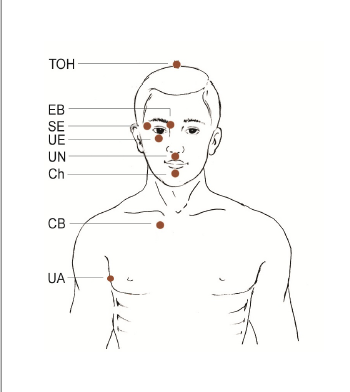
    • Step 3: Do 2 rounds of TAPPING: Start with the top of your head and move down. Below is a picture of the tapping points. (TOH = Top of Head; EB = Eyebrow; SE = Side of Eye; etc.) You will use both hands’ fingertips on the head, then your hands will tap on the points on the respective side of the body (e.g., the right hand taps on the right eyebrow while the left hand taps on the left eyebrow.) Here is a short video showing the technique.

    • Step 4: RATE your emotional state post- tapping from 1 to 10. If you are still above 5, continue tapping until your rating decreases.


    Drop me a quick note and let me know how it goes. If you want to tap with me to ensure you are doing it right, you can find a spot on my calendar. And if you know someone who is stressed and could use a coach who is knowledgeable about multiple modes of stress management, I would love an introduction. Life is short – don’t let stress negatively impact your relationships, career, and state of mind.

  • Need Small Treats?

    “One of the secrets of a happy life is continuous small treats.” – Iris Murdoch 

    Continuing on the thread of happiness, it might seem obvious but experiencing POSITIVE EMOTIONS is a key part of being happy. Positive emotions not only make us feel good, but they also improve our well-being, relationships, health, and performance. Say what? Sign me up! 


    And our positive emotions don’t have to be extreme to reap these benefits. Positive emotions such as feeling inspired, peaceful, confident, amused, accepted, optimistic….these are all DEPOSITS in our personal POSITIVE EMOTION BANK ACCOUNT. 


    So many of us go through our day, our to-do lists, our meetings, our meals, without noticing what we are feeling. This upcoming week, I invite you to NOTICE when you are experiencing positive emotions. And if you are falling short on the positive emotion deposits, think about building in small treats (maybe not always desserts like my younger son is apt to do) each day. Things that bring a smile to your face.


    I Would love to hear what is on your list of small treats. I could use some treats myself this week.

  • Loneliness Vs. Solitude

    The #1 reason people are unhappy is loneliness. But there’s a sea of difference between LONELINESS and purposeful SOLITUDE. Loneliness can feel like it’s happening to us like we don’t have any agency around it. But with solitude, there’s a sense of choice, a finite beginning and end, and a sense of freedom with what to do with our time alone.


    Of course, we all feel lonely sometimes. But if you often feel lonely, please use it as a SIGN to make a change. Reach out to others, volunteer, plan a get-together.


    But sometimes, it’s our ATTITUDE towards time alone that needs reframing. Can you view the time alone as positive? Do things that bring you joy, energize you? Use the time to reflect and grow? Upgrade habits and routines? Learn more about a topic of interest? The list is endless.


    Not sure where I picked up this quote, but I find myself remembering that “at the end of the day, there you are.” Be well.


    Take good care,

    Bijal

  • Second Arrow

    No one is immune to pain. There’s physical pain and there’s psychological pain. For physical pain, we can turn to our doctors and medicine, but we are in charge of how much psychological pain we bring to the situation. Asking “Why me?” or feeling that “This will never end”, and other negative thought patterns will only make us feel worse.


    One teaching from a Buddhist parable is “If you get struck by an arrow, do you then shoot another arrow into yourself?”


    Tara Brach, an author and meditation teacher, does a great job describing this second arrow: “If we look at the way we move through the day, when something happens, when we have pain in our body, when somebody treats us in a way that feels disrespectful when something goes wrong for someone we love, that’s the first arrow. Our mind and body go into a reactivity that does not help to bring healing. We blame others, we blame ourselves. That’s the second arrow.”


    Her framework for NOT shooting yourself with the second arrow: PAUSE, RECOGNIZE, OPEN. Not saying it’s easy. But it helps.


    • PAUSE: Okay, let me just sit and be, let me pause. 

    • RECOGNIZE: Can I recognize what is going on? Can I recognize what is actually here—the larger space of sound, sensation and feelings? 

      • It can be helpful to focus on a part of the body that is not in pain, even if it’s just a big toe, and be grateful that there’s no pain there.

    • OPEN: Can I open to the presence that is here?

      • Instead of reacting, choosing to RESPOND despite the pain, to not create additional pain.


    I would add REMEMBER to her framework: remember the struggles and pain you have faced in the past and SURVIVED. Let those experiences fortify your spirit. Remind yourself that you will get through this too.


    As Nietzsche’s said: “What does not kill me makes me stronger.”

  • Thriving In Tribes

    In the US the nuclear family, i.e., parents and their children, form the basic social organization and unit in society. However, humans did not evolve living in such a small group. HUMANS THRIVE IN TRIBES.


    That was true hundreds of years ago and is still true today. Wake up call => WE STILL HAVE CAVEMAN BRAINS LIVING IN OUR MODERN DAY SOCIETY. You may dress all fancy, eat a macrobiotic diet, and sit in front of an amazing tool called the computer, but you still have the same basic drives that your unsophisticated ancestors had.


    One of the takeaways from this knowledge is that each of us needs people in our lives other than our significant other to connect with, challenge us, learn from, laugh with. And don’t even get me started on raising kids without a connected, supportive, in-person, and involved extended community around to support, guide, teach, entertain, feed. 


    TAKE TIME TODAY TO REFLECT ON YOUR TRIBES. Do you have groups of people with whom you feel supported, connected, or challenged in a good way? Or groups you can just totally let your guard down and be yourself.


    These tribes provide what psychologists call SOCIAL CURRENCY, which I may touch on in the future because it’s so valuable for people in the workplace but also powerful in life overall.


    But going back to your tribes, here are a few categories from my list of tribes that I encourage you to reflect on. Ideally, you want multiple groups in your life that collectively form your extended community. Ask yourself, “Do I have tribes where I…”

    1. Learn from other members

    2. Feel members see me, really see the real me, and fully accept me

    3. Have stimulating conversations

    4. Feel I can lean on members during difficult milestones like losing a parent

    5. Share a common heritage (ethnic, geographical, socioeconomic, etc.)

    6. Have fun (game night, poker, exercising, etc.)

    7. Share similar work

    8. Share values, like community service, curiosity, etc.

    9. Share common interests, like hiking, cooking, dancing

    10. Physically see members like people in my neighborhood

    11. Have a shared history or experience (e.g., college, childhood)

    12. Xyz (fill in the blank based on what is important to you)


    I have worked with clients, including financially successful clients, who have not made the effort to develop their tribes. They can feel alone, disconnected, not supported, like something is missing in their lives. If you fall into this category, please reach out. Your life can and will be so much richer, in non-monetary ways, with your tribe rallying around you. Don’t spend another day, week, year without satisfying the primal side of you that thrives in tribes.

  • EPIC Conversations

    Riaz Patel, who graduated from the same class at Penn with me, has a method to facilitate CONVERSATIONS between “people who start out believing they are diametrically opposed.” Riaz bills himself as a “triple minority”because he’s a Muslim, an immigrant, and gay. His model has helped him and many others have deep conversations with people of all backgrounds, faiths, and beliefs.

    The model is called EPIC. While he focuses on using it for difficult conversations, I think we can use it for all types of conversations. I’m planning on trying it out on my family members tonight! I hope you will try it as well. Drop me a line and let me know how it goes and what tweaks you made to personalize it.

    EPIC:

    • Equalization: figure out what you both have in common.

    • Personification: understand the other person’s story, where they are coming from.

    • Information Gathering: ask questions about their personal experiences that have shaped them. Try steer the conversation away from outside sources such as CNN or books and focus on the other person.

    • Collaboration: if there is some connection and trust, you can move to this last phase where you look for ways to help solve a shared problem.